Dividing what you've built together is, for most couples, the hardest part of ending a marriage. The family home, retirement savings, vehicles, and debt all land on the table at once, and decisions made under pressure can affect your finances for decades. Florida law gives a judge the authority to decide how that property gets divided - but the vast majority of Florida divorce cases settle before trial, and mediation is the most common path to that resolution. This guide covers how that process actually works, category by category, from the first financial document you exchange to the moment a settlement agreement becomes a court order.
Florida's Equitable Distribution Rule - What "50/50" Really Means
Florida starts from a presumption that marital assets and debts should be split equally between spouses. That presumption is not a guarantee. The law identifies ten factors courts can use to justify an unequal division - among them the length of the marriage, each spouse's economic circumstances, whether one spouse contributed to the other's education or career advancement, and whether one spouse interrupted their own career to raise children.
In litigation, a judge weighs those factors and issues a ruling. You don't control the outcome; you hope the judge's reading of the facts matches yours.
In mediation, those same ten factors become a framework for negotiation. A spouse who stepped back professionally to manage the household can point to that contribution when arguing for a particular allocation. A spouse with a significantly lower earning capacity has context for why a strictly equal split might not be equitable in practice. The mediator helps both parties see where those factors point and find an agreement that reflects their actual circumstances - rather than waiting on a judge's interpretation of what fairness looks like from a bench. The couple applies the law to facts they both know intimately. A judge does not have that advantage.

Marital vs. Non-Marital Property - Drawing the Line
Florida law divides property into two categories: marital and non-marital. Only marital property is subject to equitable distribution.
Marital property generally means anything earned, purchased, or acquired during the marriage - wages, retirement contributions, real estate equity built while married, investment accounts funded with marital income. It doesn't matter whose name appears on the account or deed. If it grew during the marriage, it's typically marital.
Non-marital property includes what you owned before the marriage, property you inherited, and gifts given specifically to you rather than to the couple as a unit. These remain yours alone - unless commingling happens.
Commingling is the mechanism that converts separate property into marital property, and it catches people off guard regularly. You inherit money from a parent and deposit it into the joint checking account you share with your spouse. That inheritance is now mixed with marital funds. A court - or a mediator helping both parties work through a dispute - will have difficulty separating your share from marital money flowing in and out of the same account.
The same risk applies to real estate. If you owned a home before the marriage and then used marital income to pay down the mortgage or fund significant improvements, the original equity might be traceable, but the appreciation layered on top of marital contributions becomes contested.
Keeping non-marital assets genuinely separate - dedicated accounts in your name alone, funded only from non-marital sources - is the practical protection. If commingling has already happened, mediation creates space to reach a fair characterization without the all-or-nothing ruling a judge tends to impose. Documenting the original source of the asset, with account statements going back as far as possible, gives both the mediator and the parties something concrete to work from.
The Mandatory Financial Disclosure Step
Before any asset negotiation can begin, Florida courts require both spouses to exchange a specific set of financial documents. This requirement applies in most divorce proceedings, including those resolved through mediation. In a standard divorce, the parties cannot simply agree among themselves to skip the exchange - though Florida's simplified dissolution procedure, available only when there are no minor children, no request for alimony, and full agreement on all issues, does allow some disclosure requirements to be waived. For most couples navigating mediation, the full disclosure obligation applies.
The required disclosures typically include recent tax returns, pay stubs, bank and retirement account statements, mortgage and loan documents, and a comprehensive list of debts. Both spouses also complete a standardized financial affidavit covering their income, expenses, assets, and liabilities.
Some couples experience this step as an intrusion. In practice, it does the opposite of slowing mediation down. When identical financial records are in front of both spouses before the first session, negotiations are grounded in facts rather than assumptions. Disputes about what an account might be worth give way to conversations about what it actually is worth, with current statements as evidence. Positions that seemed firm going in often shift once both parties can see the same numbers.
Full disclosure also protects the settlement after it's signed. If an asset surfaces later that one spouse failed to disclose - a side business, a brokerage account, a retirement plan the other spouse didn't know existed - the agreement can be reopened. Transparency at this stage is not just a legal requirement. It is the foundation for a settlement that holds.
What Happens to the Marital Home
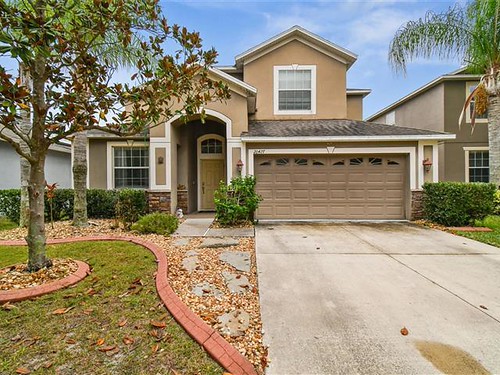
For most Tampa couples, the home is the largest single asset and often the most emotionally complicated one to negotiate. Mediation offers three practical paths.
Sell and Split
Both spouses agree to list the home, accept an offer, and split the net proceeds after paying off the mortgage, agent commissions, and closing costs. A traditional sale generates cash both parties can use to start their separate financial lives. The trade-off is time on market and selling costs. Couples who prioritize speed over maximizing proceeds sometimes choose a cash buyer, who can close in a matter of weeks rather than months.
Buyout and Refinance
One spouse keeps the home and pays the other their share of the equity - defined as the current market value minus the outstanding mortgage balance. The buying spouse must refinance the mortgage entirely in their own name. Lenders evaluate that refinance based on a single income, and their requirements around debt levels relative to income mean not every spouse who wants to keep the home can qualify. A cash-out refinance can fund the buyout payment to the departing spouse at the same closing, which is efficient when there's enough equity to support it. If the buying spouse cannot qualify on their current income, timing the refinance to coincide with a pay increase or paying down other debts first may open the door.
Deferred Sale
One spouse stays in the home for a defined period - often until the youngest child finishes school - and the house sells at a later date with proceeds split at that time. This arrangement requires a detailed agreement covering who pays the mortgage, property taxes, insurance, and maintenance during the deferral; what triggers an early sale; how each spouse's share of equity is calculated at the eventual closing; and what happens if the staying spouse wants to refinance or sell before the agreed date. Mediation is particularly well-suited to deferred arrangements because every one of those variables can be negotiated by the people who actually understand the household, rather than handled by boilerplate in a court order.
Splitting Retirement Accounts - 401(k)s, Pensions, and IRAs
Retirement savings accumulated during the marriage are marital property, regardless of whose name is on the account. Only the portion contributed or earned after the wedding date is subject to division - funds in place before the marriage belong to the contributing spouse. Most plan administrators can produce a statement showing the account balance as of the marriage date, which is the baseline for calculating the marital portion.
How the division is executed depends on the account type.
Employer Plans and QDROs
For 401(k)s, pensions, and profit-sharing plans, dividing the account requires a Qualified Domestic Relations Order - a QDRO. This is a separate court order issued after the divorce decree is signed that instructs the plan administrator exactly how to split the account. The marital settlement agreement alone is not sufficient. Without a QDRO, the non-employee spouse cannot access their share, regardless of what the settlement says. Drafting, submitting, and receiving plan approval for a QDRO is a process that can take anywhere from a few months to well over a year after the divorce is finalized, depending on the plan administrator and plan complexity - which means retirement transfers are often the last piece of a settlement to actually complete. Factor that timeline into any post-divorce financial planning.
IRAs
IRAs work differently. They do not require a QDRO. The division is specified in the marital settlement agreement, and the transfer happens as a direct rollover from one IRA to a newly established IRA in the receiving spouse's name. Handled correctly, this avoids early withdrawal penalties and immediate tax liability - the money moves between retirement accounts without leaving the tax-advantaged system. The mechanics are simpler, but the marital settlement agreement must describe the division clearly and completely.
In mediation, the split is the couple's decision - and it doesn't have to be equal. A spouse who keeps a larger share of home equity might agree to a smaller share of retirement savings. A spouse who assumes a particular debt might negotiate for a greater retirement account allocation in return. Those trade-offs are only possible when the people at the table are making the decisions.

Vehicles, Bank Accounts, and Other Personal Assets
Cars are typically the simplest major asset to resolve. Most couples assign each vehicle to the spouse who drives it, with any outstanding loan staying with that car. If the market values differ meaningfully, a cash equalization payment can level the allocation.
Joint bank accounts are usually divided as of a specific agreed date - often the date of separation or the date the divorce petition is filed. Account statements from that date establish the baseline. Withdrawals after that date, if contested, become part of the discussion and documentation matters.
Investment accounts held in one spouse's name but funded with marital earnings are still marital property. The same tracing principle applies as with retirement accounts: pre-marital contributions stay separate, but contributions and growth during the marriage are subject to division.
Personal property - furniture, electronics, household items - tends to get sorted out informally before or alongside mediation. A mediation session concentrates on assets with significant value and genuine disagreement. Most couples handle everyday household contents between themselves, saving the formal process for things that actually move the financial needle.
Dividing Marital Debt - Credit Cards, Car Loans, and Mortgages
Marital debt is distributed through the same equitable distribution process as marital assets. Credit cards opened during the marriage, car loans, home equity lines of credit, and personal loans all go on the balance sheet alongside the property. Each debt can be assigned to a specific spouse as part of the overall settlement.
The critical risk in any debt assignment is that creditors are not bound by a divorce decree. If the marital settlement agreement assigns a joint credit card to your ex-spouse and they stop paying, the credit card company can still pursue you - because your name remains on the original account contract. The divorce order does not override that agreement.
Indemnification clauses address this risk. The settlement agreement should require the spouse who takes on a debt to indemnify the other if the creditor comes after them - meaning the responsible spouse must cover any resulting costs and damages. That clause won't stop collection efforts from starting, but it creates clear legal recourse against the other party.
Mediation also allows couples to engineer creative debt payoff structures that a court order rarely would. Paying off a high-interest joint credit card from home sale proceeds, buying out a car loan at the same closing as a property transfer, structuring debt clearance as an integral part of the asset exchange - these arrangements can be built around the actual cash flows of the transaction rather than left as loose ends that linger after the decree is signed.
How Asset Division Unfolds Inside a Mediation Session
A mediation session on asset division doesn't start cold. Both spouses have already exchanged financial disclosures and reviewed them before walking in. The mediator has often reviewed them as well. The opening isn't spent explaining what exists - it's spent discussing how to divide it.
The mediator's first task is helping both parties build a shared inventory: every asset, every debt, with current values where available. This step occasionally surfaces surprises - an account one spouse was unaware of, a debt whose full balance had not been fully seen before. Getting everything onto one list is the foundation for everything that follows.
From there, the mediator moves through the inventory identifying areas of easy agreement and areas of genuine dispute. Vehicles and bank accounts often resolve in minutes. The home, retirement accounts, and significant debts are where sessions go deep.
When direct conversation between spouses produces heat rather than progress, mediators use separate caucuses - private meetings with each party in turn. The mediator carries proposals between rooms and can ask questions that are easier to answer without the other spouse present: What do you actually need from this outcome? What would you be willing to give up to get it? This process often surfaces flexibility that wasn't visible in the joint session.
The trade-off structure that emerges is what makes mediation valuable in a way that a court ruling cannot replicate. One spouse takes the house; the other receives a larger share of retirement savings. One spouse assumes a specific debt; the other releases a claim on a vehicle. One spouse accepts lower alimony in exchange for more equity. A judge imposes a decision based on the evidence presented. A mediated settlement is a negotiated exchange built around the couple's specific financial picture and priorities.
When both spouses reach agreement on all assets and debts, the mediator helps document the terms in a marital settlement agreement. Both parties sign it. The court reviews and approves it. From that point forward, it carries the same legal weight as a judge's ruling - but it was built by the people it applies to, not handed down to them.
Mediation vs. Litigation for Asset Division - Time, Cost, and Privacy
A contested litigated Florida divorce that goes to trial on asset division routinely takes one to two years to resolve. Mediation for the same issues typically wraps up in two to six months from start to finish. That gap matters because financial circumstances shift during a prolonged process - property values move, account balances change, one spouse may need to make major financial decisions before the case concludes.
The cost difference is significant. Total mediation costs for both spouses combined are a fraction of what two separate litigation attorneys cost through trial. For couples with lower household incomes, court-connected mediation through the Thirteenth Judicial Circuit in Tampa may be available at reduced or no cost - contact the Mediation and Diversion Services office directly for current rates and eligibility. Private mediation costs more per session than court-connected services, but the total hours involved remain dramatically lower than contested litigation. The combined savings, across time and fees, can be substantial enough to represent a meaningful financial outcome in its own right.
There is also the question of privacy. Court proceedings are public record. The details of your financial life - retirement balances, what your home sold for, what debts you carried, what each spouse earned - become part of a file that anyone can request. Mediation is confidential. What is said in a session, and what is offered or considered before the final agreement, stays there.
Florida's 2023 elimination of permanent alimony - replaced by durational support tied to marriage length - changed how some couples approach the trade-off between assets and ongoing support. A spouse who might previously have relied on open-ended alimony now has reason to negotiate for a larger asset share upfront. Mediation gives couples the flexibility to make that calculation explicitly and build the outcome that fits their actual financial projections, not a default the statute imposes. That ability to tailor the result - rather than accept whatever a judge determines is equitable - is the defining advantage of handling asset division in mediation.